 AI
The Trial That Needs a Sales Call
A pricing page that asks you to contact sales is not hiding a number out of shyness. It is sorting buyers.
This note reads six AI pricing pages as they appeared on October 24, 2026 and records exactly where each one stops printing figures. One page has no dollar sign on it anywhere.
The pattern is consistent enough to plan around. The quote wall tends to sit immediately in front of the features a careful small team actually wants: audit logs, retention controls, provisioning and a written service level.
One page is called pricing and contains no prices
Glean's pricing page, read October 24, 2026, contains no dollar amount. A search of the rendered page source returned zero matches for a dollar sign followed by a digit.
The page title is Glean, Enterprise AI that Works. The call to action appears ten times and reads: get a demo.
This is not an oversight on a small vendor's site. It is the pricing page of a well-funded enterprise search company, and it has been designed so that the first number you hear comes from a person.
Nothing about that is against the rules. It does mean the product cannot be compared with anything, by anyone, without a meeting first.
Perplexity asks the question and does not answer it
The Perplexity Enterprise page carries an FAQ. One of the questions is: how is Perplexity Enterprise priced.
The answer did not render in the page source read on October 24, 2026. No dollar figure appears anywhere on the page, and the two calls to action are get started and contact us.
A second FAQ entry asks what the difference is between Enterprise Pro and Enterprise Max, which means there are at least two unpriced tiers above the consumer plan.
We are not treating the missing answer as concealment. We are treating it as unreadable, which for a buyer comparing shortlists amounts to the same thing.
Four suites stop printing numbers at the same point
The more common pattern is three published prices and a fourth column that says talk to us. What sits in that fourth column is remarkably consistent.
- Notion: Free, Plus and Business are priced; Enterprise says custom pricing and contact sales, and it is the only tier with zero data retention at the model providers, SCIM provisioning and an audit log
- Google Workspace: Starter, Standard and Plus are priced; Enterprise says let's talk and contact sales, and it is the tier with data loss prevention, context-aware access, enterprise data regions and enhanced support
- Slack: Pro at $8.75 monthly and Business+ at $18 monthly are priced; Enterprise+ says contact sales for pricing, and it is the tier labelled Enterprise-Grade AI with enterprise search
- monday.com: Basic, Standard and Pro are priced per seat; Enterprise says custom price and get a quote, with custom AI credits matched to how your team actually works and a 99.9 percent uptime commitment
Read as a group, the unpriced column is where the compliance paperwork lives. Retention control, audit trail, identity provisioning and the uptime number are all on the far side of a conversation.
That matters more for AI than it did for storage. A team that has to tell a customer how long prompts are kept needs a tier whose price it cannot look up. We collected what the vendors do publish about retention in a separate note.
The unpriced add-on is the newer move
Two vendors have started doing something different: they publish the plan price and then withhold the price of the AI upgrade on top of it.
Google Workspace lists Gemini as included in every Business tier, then lists AI Expanded Access under the heading add-ons sold separately with no figure beside it.
The add-on's own help article explains why. Pricing depends on your local currency and the duration of your subscription, discounts may be available, and the reader is directed to a button to learn their specific pricing.
The same article is unusually generous with everything except the price. It publishes exact monthly allowances, including 5,000 Sheets AI function calls on the paid plans against 25,000 with the add-on.
So you can learn precisely what the upgrade gives you and nothing at all about what it costs. That is a new shape of pricing page and worth naming.
Atlassian does a milder version. Its Rovo page publishes a list price of $0.01 per credit for overage, then says volume discounts are offered for prepaid credit packs depending on commitment level at time of purchase, without a rate.
A free trial is not a price, and sometimes not a trial
Trials are the other place where self-serve quietly ends.
Google Workspace offers 14 days at no cost on Starter, Standard and Plus. The Enterprise column has no try now button at all, only contact sales. The trial and the quote wall line up exactly.
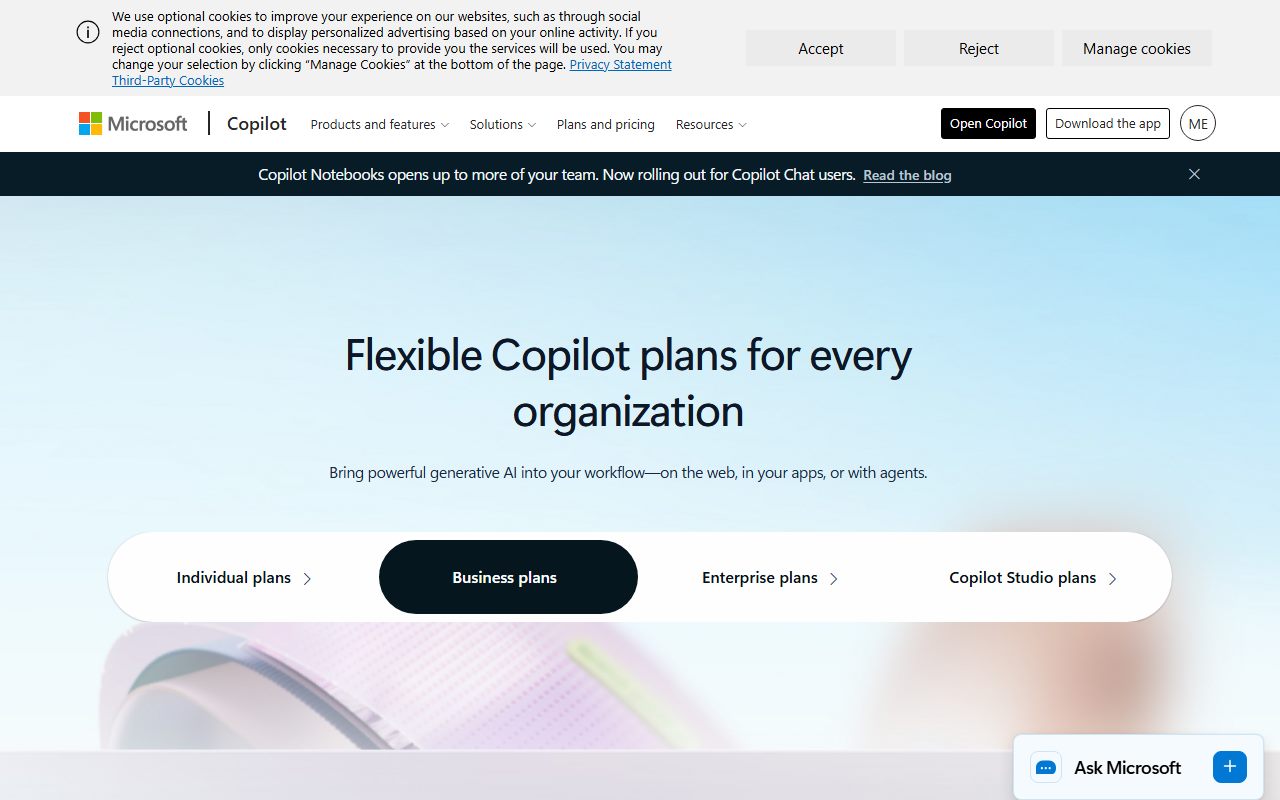
Microsoft's Copilot page offers a one-month free trial with two conditions printed in the footnotes: a credit card is required to sign up, and the subscription automatically converts to a paid one when the month ends.
The same footnote gives a seven day cancellation window for a prorated refund once the paid subscription begins. A trial that bills you unless you act is a different product from one that expires.
Notion is the plainest case. The string free trial does not appear on its pricing page at all. The free route is the Free plan, where the AI features carry the label Limited Trial with no limit stated.
One more obstacle is geographic rather than commercial. Read from Vietnam, the Microsoft Copilot page printed the line this product is not available in your market twelve times beside its plan cards, while still showing the prices.
What this costs a five-person team
The practical consequence is not the money. It is the week.
A five-person team that needs an audit log cannot compare two products on a Tuesday afternoon. It can compare the three priced tiers of each, discover that neither includes what it needs, and then book two calls.
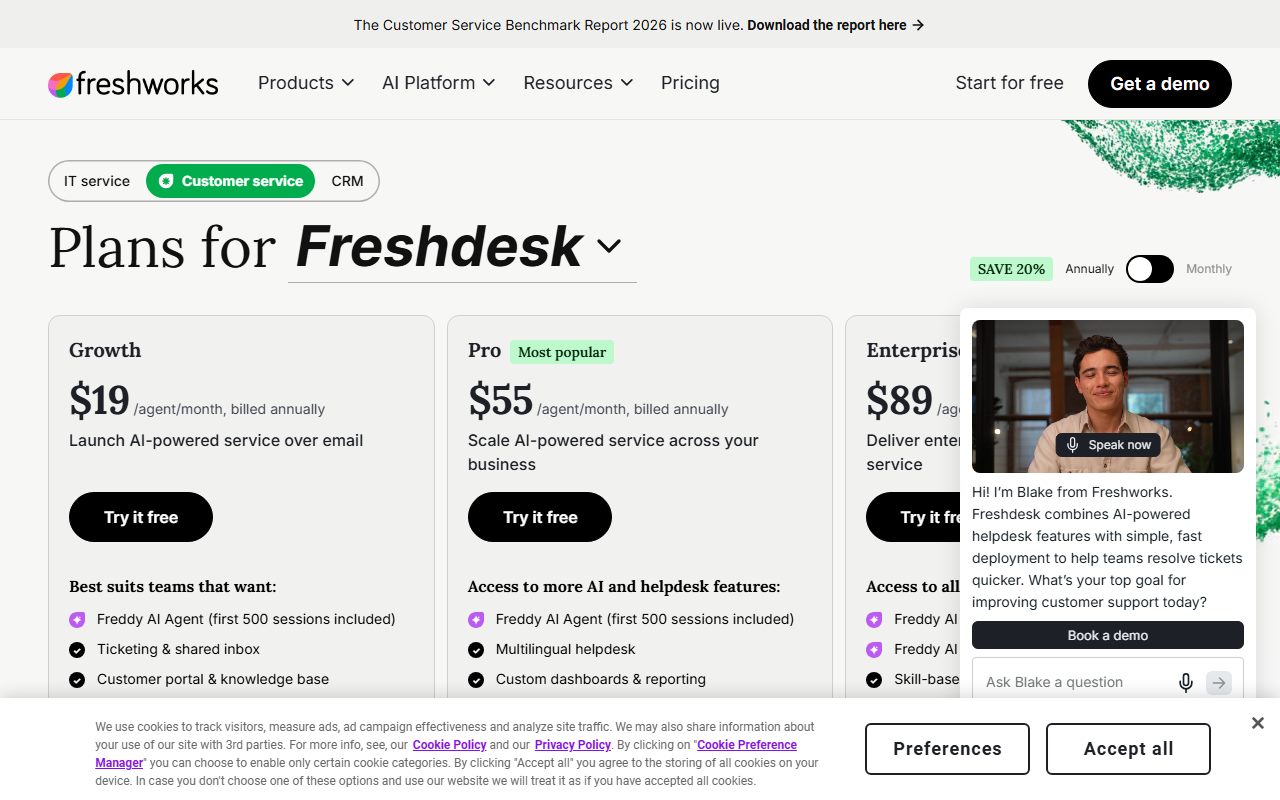
The same thing happens in help desk software, where the tier holding single sign-on is often sold by demo rather than card. The pattern is set out in our Help Scout and Intercom Fin comparison and in the shortlist of AI help desk assistants.
There is a legitimate reason for some of it. Enterprise contracts carry data residency terms, indemnities and negotiated service levels that genuinely cannot be printed on a card.
That reason does not extend to an entire pricing page with no numbers on it, and it does not explain an add-on whose usage limits are published to the single unit while its price is not.
How to read a pricing page for the number that is missing
- Find the rightmost column first and read what it contains, not what it costs, because that tells you what the priced tiers are missing
- Check whether the trial button exists on every tier or stops before the last one
- Search the page for the word custom; it usually marks support, credits and retention all at once
- If an add-on is listed with no price, open its help article anyway, because the limits are often published even when the cost is not
- Treat a trial that needs a card and auto-renews as a purchase with a cancellation window, and diarise the date
- If the whole page has no figure on it, write down the date you looked, because that is the only fact you have
Bottom line
Of six AI pricing pages read on October 24, 2026, one published no price at all, one asked how it was priced and did not answer, and four stopped at the tier where governance begins.
None of that is unlawful or even unusual. It does mean a small team should budget time, not just money, for the tier it will eventually need.
The dated discounts on the tiers that do publish numbers are collected in the introductory price note, and the plans themselves are graded in the best AI assistant plans for small teams.
For products where we could read everything, see the Microsoft 365 Copilot Business review, the Freshdesk review, Help Scout and Intercom Fin.
What this brief prints and what it cuts is in issue zero.
Sources
- Glean pricing page - checked October 24, 2026
- Perplexity Enterprise - checked October 24, 2026
- Notion pricing page - checked October 24, 2026
- Google Workspace pricing page - checked October 24, 2026
- AI Expanded Access, Workspace admin help centre - checked October 24, 2026
- Slack pricing page - checked October 24, 2026
- monday.com pricing page - checked October 24, 2026
- Atlassian Rovo plans and credits - checked October 24, 2026
- Microsoft Copilot for business pricing - checked October 24, 2026