 AI
The Cached-Input Price Is the One That Matters
Every AI pricing page shows an input rate and an output rate. All three big platforms also charge a third, much lower rate for input the model has already seen, and that is the rate production work actually pays. It sits between 2.5 percent and 50 percent of the headline number depending on which model row you are reading. This note puts the three caching pages side by side: what the discount is, how many tokens a prompt needs before it qualifies, and how long the saving survives. Every figure here was read from vendor documentation on October 12, 2026. Same house rule as issue zero: each number gets a link.
Cached input is a separate price, not a discount code
Nothing has to be switched on. OpenAI's guide states that prompt caching is enabled by default for supported models. Google's documentation says implicit caching is enabled by default for all Gemini 2.5 and newer models.
Anthropic is the exception. Cached sections are marked in the request with cache_control, and the documentation allows up to four cache breakpoints per call. If four explicit breakpoints already exist, automatic caching returns a 400 error.
So on two platforms the saving arrives whether or not anyone planned for it. On one platform it arrives only because a developer wrote the marker.
The multiplier depends on the model row, not on the vendor
Per the OpenAI API pricing page, checked October 12, 2026, gpt-6.1-sol lists $2.00 per million input tokens and $0.10 cached. On the same page gpt-4o lists $2.50 input and $1.25 cached.
- gpt-6.1-sol: $2.00 input, $0.10 cached, $10.00 output
- gpt-6-luna: $0.10 input, $0.01 cached, $0.50 output
- gpt-5.1 and gpt-5: $1.25 input, $0.125 cached, $10.00 output
- gpt-4.1: $2.00 input, $0.50 cached, $8.00 output
- gpt-4o: $2.50 input, $1.25 cached, $10.00 output
Arithmetic by this desk on those published rates: the cached saving is 95 percent on gpt-6.1-sol, 90 percent on the gpt-5 and gpt-6-luna rows, 75 percent on gpt-4.1 and 50 percent on gpt-4o. One page, four different answers.
Anthropic publishes multipliers rather than a column. Cache reads cost 0.1 times base input on most models, 0.05 times on Opus 5.5 and Sonnet 5.5, and 0.025 times on Fable 5.1 and Mythos 5.1, per its prompt caching page.
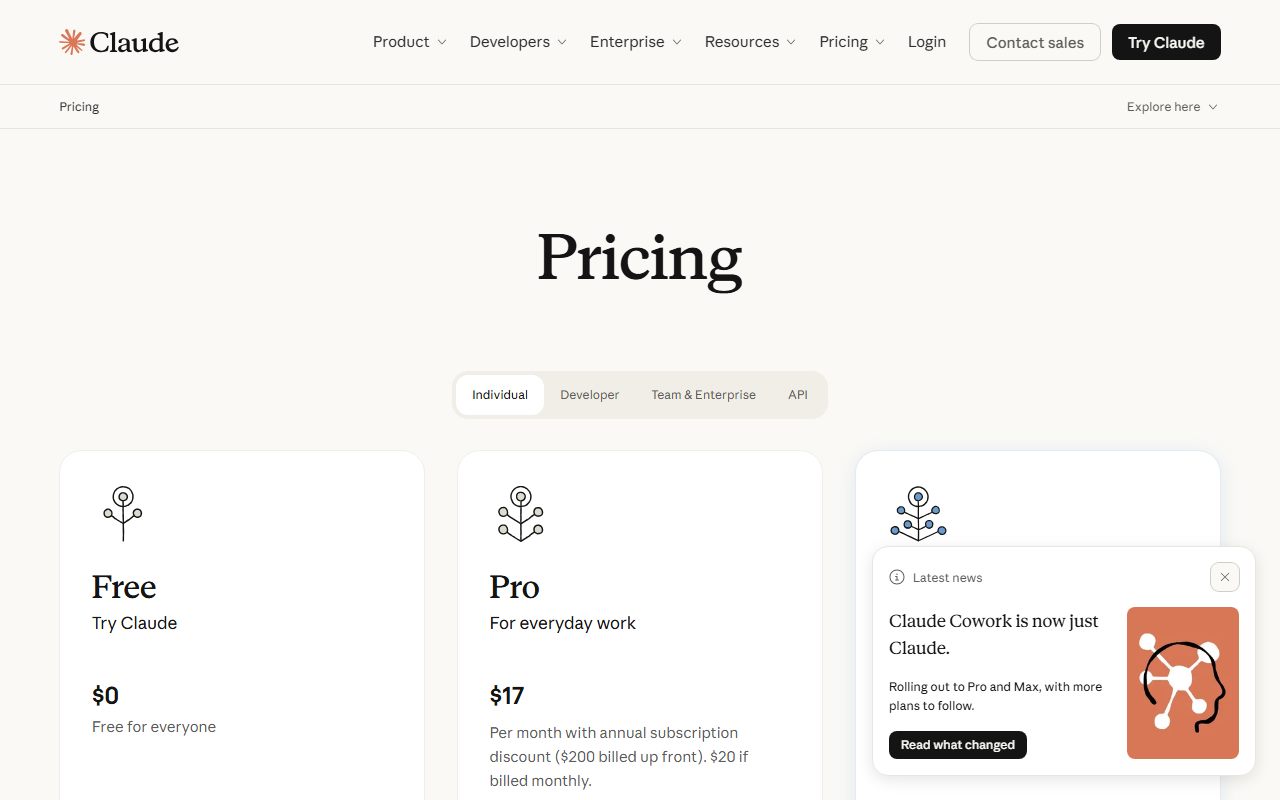
Applied to the Sonnet 5.5 rate of $2.00 per million input tokens on the Claude pricing page, a cache read works out at $0.10 per million. That multiplication is ours, not a figure Anthropic prints.
Google prints the cache rate directly. Gemini 3.8 Flash input is listed at $0.75 per million through December 31, 2026, with context caching at $0.075. That is a flat 10 percent.
Anthropic charges to write the cache, and charges more for a longer one
This is the line most budgets miss. Per the Anthropic caching page, a five minute cache write costs 1.25 times the base input price, and a one hour cache write costs 2 times.
On Sonnet 5.5 that is $2.50 per million tokens for the short cache and $4.00 for the long one, against a $2.00 base. Writing the cache costs more than not caching at all.
Caching therefore pays only when the same prefix is read back. Read it twice at 0.05 times base and the saving clears the 1.25 times write. Read it once and the call cost more than it needed to.
Neither the OpenAI caching guide nor the Gemini caching page lists a separate write charge for the default behaviour, and the OpenAI pricing table has no write column. That is what the documentation shows; it is not a promise that no write cost exists.
Every platform has a token floor, and they are not the same
Short prompts cannot be cached at all. Anthropic's page is blunt: requests to cache fewer tokens than the minimum are processed without caching, and no error is returned. The bill simply arrives at full price.
- Anthropic, 512 tokens: Opus 5.5, Sonnet 5.5, Haiku 5.5, Fable 5.1, Mythos 5.1, Opus 5, Fable 5, Mythos 5
- Anthropic, 1,024 tokens: Sonnet 5, Sonnet 4.6, Sonnet 4.5, Opus 4.8, Opus 4.1, Opus 4
- Anthropic, 4,096 tokens: Opus 4.6, Opus 4.5, Haiku 4.5
- OpenAI, 1,024 tokens for GPT-5.6 and later; earlier models vary with tools and images
- Google, 4,096 tokens for implicit hits on Gemini 3.8 Flash, 3.6 Flash and 3.1 Pro Preview; 2,048 tokens on Gemini 2.5 Flash and 2.5 Pro
A support macro of 300 tokens clears none of those floors. A policy document of 6,000 tokens clears all of them. The floor, not the multiplier, decides whether caching is even relevant to a given job.
The clock is the third variable
OpenAI's guide states that on GPT-5.6 and later a cached prefix stays eligible for reuse for 30 minutes after its most recent write or reuse. Earlier models typically hold five to ten minutes of inactivity, up to one hour.
Anthropic's default is a five minute time to live, with a one hour option set through ttl in cache_control at the 2 times write rate. The Gemini caching page does not state a lifetime for implicit caching.
OpenAI adds two limits worth reading before any architecture decision. Cached states live on individual machines, are not shared across organisations, and cannot be reused across regional processing boundaries.
What a small team should take from this
Most readers of this brief buy seats, not tokens. Seat plans such as ChatGPT Business, Claude Team and Microsoft 365 Copilot Business expose none of these rates on an invoice.
Caching starts to matter the moment someone on the team builds something: a ticket tagger, a weekly report, a document classifier. That is where one long prefix gets sent again and again.
- Check the floor first. A prompt under 512 tokens will never cache on any of the three platforms.
- Check the model row, not the vendor. A 50 percent cached rate and a 95 percent cached rate sit on the same price page.
- Count reads per write. A single read does not pay for an Anthropic cache write.
- Put the stable text at the top. Caching works on prefixes, so system prompts and reference documents go first.
- Expect the saving to lapse. Thirty minutes of quiet is enough to lose it on OpenAI, five minutes on Anthropic's default.
Cheap small models change the maths again. Haiku 5.5 at ten cents per million input tokens already sits below the cached rate of several larger models, which can make caching work not worth doing for short jobs.
If the work is done by an agent rather than a person, read who pays when the agent does the work next. The billing unit shifts there as well, and the two effects stack.
Bottom line
Budget with the cached-input rate, because production prompts repeat. It is 5 percent of base on one OpenAI model and 50 percent on another, and Anthropic charges 1.25 or 2 times base to create the cache before any saving starts.
None of this reaches a seat invoice. For that side, our guide to AI assistant plans for small teams and the ChatGPT Business against Claude Team comparison are the places to start.
Sources
- Pricing, OpenAI API documentation - checked October 12, 2026
- Prompt caching, OpenAI API documentation - checked October 12, 2026
- Prompt caching, Claude Platform documentation - checked October 12, 2026
- Claude pricing page - checked October 12, 2026
- Gemini API pricing - checked October 12, 2026
- Context caching, Gemini API documentation - checked October 12, 2026