 AI
The Same Model at a Different Price
Choosing where a model runs is now a pricing decision, not just a compliance one. Three vendors picked the same surcharge for it, and a fourth route does not use a surcharge at all.
This note reads the published regional and data residency pricing at OpenAI, Anthropic, Google Cloud and AWS, as the pricing pages showed it on October 30, 2026.
The first-party platforms express it as a percentage. The marketplaces express it as a different number per region, which is harder to forecast and easier to miss.
Three vendors landed on the same ten percent
The OpenAI pricing page carries it as a footnote under the flagship tables. Regional processing endpoints for data residency are charged a 10 percent uplift for models released on or after March 5, 2026.
The same sentence adds that FedRAMP endpoints are also charged a 10 percent uplift. Both are stated as uplifts on the standard rates printed above, not as separate rate cards.
Anthropic uses a multiplier instead of a percentage. For Claude 4.6 and later models, specifying US-only inference through the inference_geo parameter incurs a 1.1x multiplier on all token pricing categories.
Global routing is the default and uses standard pricing, per the same page. Earlier models do not support the parameter at all, and a request that includes it on those models returns a 400 error.
Google prints the result rather than the rule. On the Vertex AI table, Gemini 4 Argon reads $2.00 input and $10.00 output on the global endpoint, and $2.20 and $11.00 on non-global.
That is a 10 percent gap on both figures, by editorial arithmetic on the published pair. Three vendors, three different notations, one number.
The uplift travels down every column
This is the part most likely to break a cost model. The uplift is not applied to a headline rate and then forgotten about for the discounted rows.
Anthropic spells out the scope: all token pricing categories, including input tokens, output tokens, cache writes and cache reads. On Claude Haiku 5.5 it also applies to the higher prices for prompts over 100,000 tokens.
The Vertex table shows the same behaviour in figures. Cached input on Gemini 4 Argon is $0.10 global and $0.11 non-global, and the batch rows read $1.00 and $5.00 global against $1.10 and $5.50 non-global.
The priority rows follow suit at $3.60 and $18.00 global against $3.96 and $19.80 non-global. Every discount keeps its shape and then carries the uplift on top.
Anthropic says as much in one line about its cache multipliers, which stack with other pricing modifiers including the Batch API discount and data residency. Discounts do not shield a residency choice; they compose with it.
For how large the cache rows can get in the first place, see the cached-input price note.
Which routes carry the uplift is not obvious from the brand
The same model sold under four arrangements does not inherit one rule. Anthropic lists exactly which routes its 1.1x multiplier covers, and the list is specific.
It applies to the Claude API first-party, to Claude Platform on AWS, and to Claude Models on Google Cloud in the Anthropic-managed form. On Claude in Microsoft Foundry the same multiplier applies to US Data Zone Standard deployments.
Then comes the carve-out. Partner-operated platforms, which the page names as Bedrock and the Google-managed form of Claude Models on Google Cloud, have independent regional pricing.
Independent means no percentage at all. It means a separate table, maintained separately, which is where the differences stop being tidy.
Google adds a start date to its own arrangement. Non-global pricing takes effect for the generally available Gemini 3 and later families of all Google models starting on July 1, 2026, per the footnote under the table.
On a marketplace, region is a different number, not a percentage
The Amazon Bedrock pricing page does not publish a regional multiplier. It publishes a separate table per region group, and the spread between them is far wider than ten percent.
MiniMax M2.5 is the clearest example on the page. In US East and US West regions it reads $0.30 per million input tokens and $1.20 output.
- US East (N. Virginia), US East (Ohio), US West (Oregon): $0.30 input, $1.20 output
- Asia Pacific (Mumbai), Europe (Ireland), Europe (Milan): $0.36 input, $1.44 output
- South America (Sao Paulo), Asia Pacific (Tokyo): $0.36 input, $1.44 output
- Europe (Frankfurt), Europe (Stockholm), Asia Pacific (Jakarta): $0.36 input, $1.44 output
- Europe (London): $0.47 input, $1.86 output
- Asia Pacific (Sydney): $0.31 input, $1.24 output
London is 56.7 percent above the US input figure and 55 percent above the output figure, by editorial arithmetic on those published pairs. That is not a rounding difference and it is not disclosed as a percentage anywhere.
DeepSeek v3.2 on the same page moves by a different amount again. US regions read $0.62 and $1.85, while Mumbai, Sao Paulo, Jakarta, Tokyo and Stockholm read $0.74 and $2.22.
Sydney is the tell that these tables are generated rather than negotiated. DeepSeek v3.2 there prints $0.6386 and $1.9055, which is exactly 3 percent above the US figures to four decimal places.
MiniMax in Sydney does the same thing inconsistently. M2 and M2.1 print $0.3090 and $1.2360, while M2.5 prints $0.31 and $1.24 for what the arithmetic says is the identical uplift.
The page also publishes service tiers as percentages of the standard rate: priority tier at a 75 percent premium, flex tier at a 50 percent discount. Those stack on whichever regional table applies.
A tuned endpoint pays fifty percent, not ten
One footnote on the Vertex AI page is worth more than most of the table above it, and it only applies if you have customised a model.
A tuned model endpoint will be 1.5 times the base model in a non-global region, per that footnote. In a global region it has the same prediction price as the base model.
So the regional premium on a customised model is 50 percent rather than 10 percent, and the premium disappears entirely if global routing is acceptable. That is the single largest regional gap on any first-party page checked here.
The date attached to the price is part of the price
Both Google tables print two prices for Gemini 4 Argon, separated by a date. Global input is $2.00 through November 30, 2026, and $4.00 starting December 1.
The non-global column moves in step, from $2.20 to $4.40, and output from $11.00 to $22.00. The 10 percent relationship survives a doubling of the underlying rate.
The current figure is also partly a credit rather than a rate. The footnote describes promotional pricing provided through 50 percent credits back on net spend on select models within a given period.
OpenAI dates its own promotion in the same breath as the residency footnote, noting that GPT-5.6 Sol promotional pricing is available at least through November 21, 2026. Both are the pattern in the introductory price note.
What to establish before a residency promise goes in a contract
- Whether the route is first-party or partner-operated, because only one of them publishes a percentage
- Whether the uplift reaches the cached and batch rows, which on two platforms it does
- Whether the model generation even supports the parameter, since older ones return an error
- Which specific regions the table groups together, because London sits alone on one page
- Whether any model on the account is tuned, where the premium is five times larger
- The expiry date on the rate you priced against, since two vendors print one
Residency is also a data question, not only a billing one. What each vendor says it retains, and for how long, is covered in what the AI vendors say they keep.
Bottom line
Keeping inference in one country costs 10 percent at OpenAI, Anthropic and Google Cloud, stated three different ways and arriving at the same figure.
Buying the same model through a cloud marketplace replaces that percentage with a regional table, where the gap reached 56.7 percent between London and Virginia on one model.
The uplift applies to every column including the discounted ones, so a cheap tier in an expensive region is not cheap. For how the underlying rate also moves with prompt size, see the long-context price note.
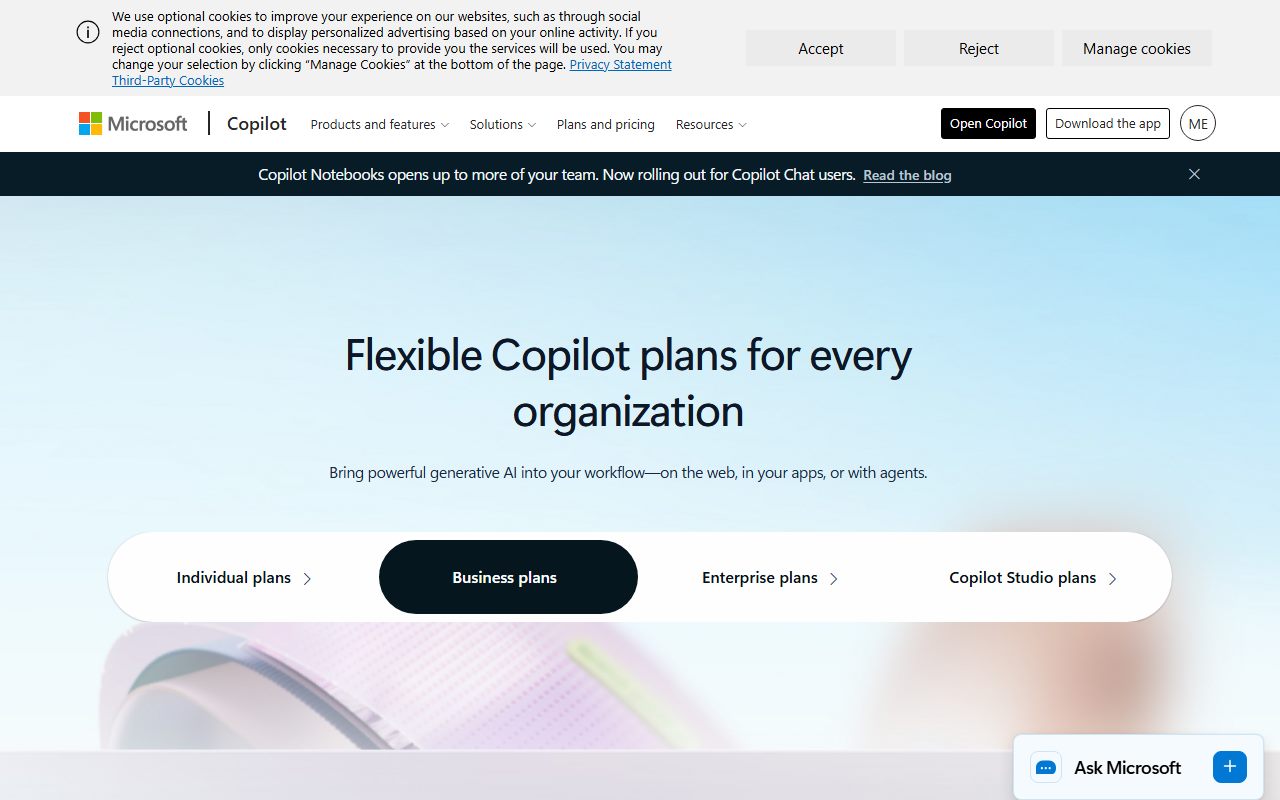
Licensing the same capability through a seat instead moves this problem to the vendor, with its own complications: see the Microsoft 365 Copilot Business review and the Copilot renaming note.
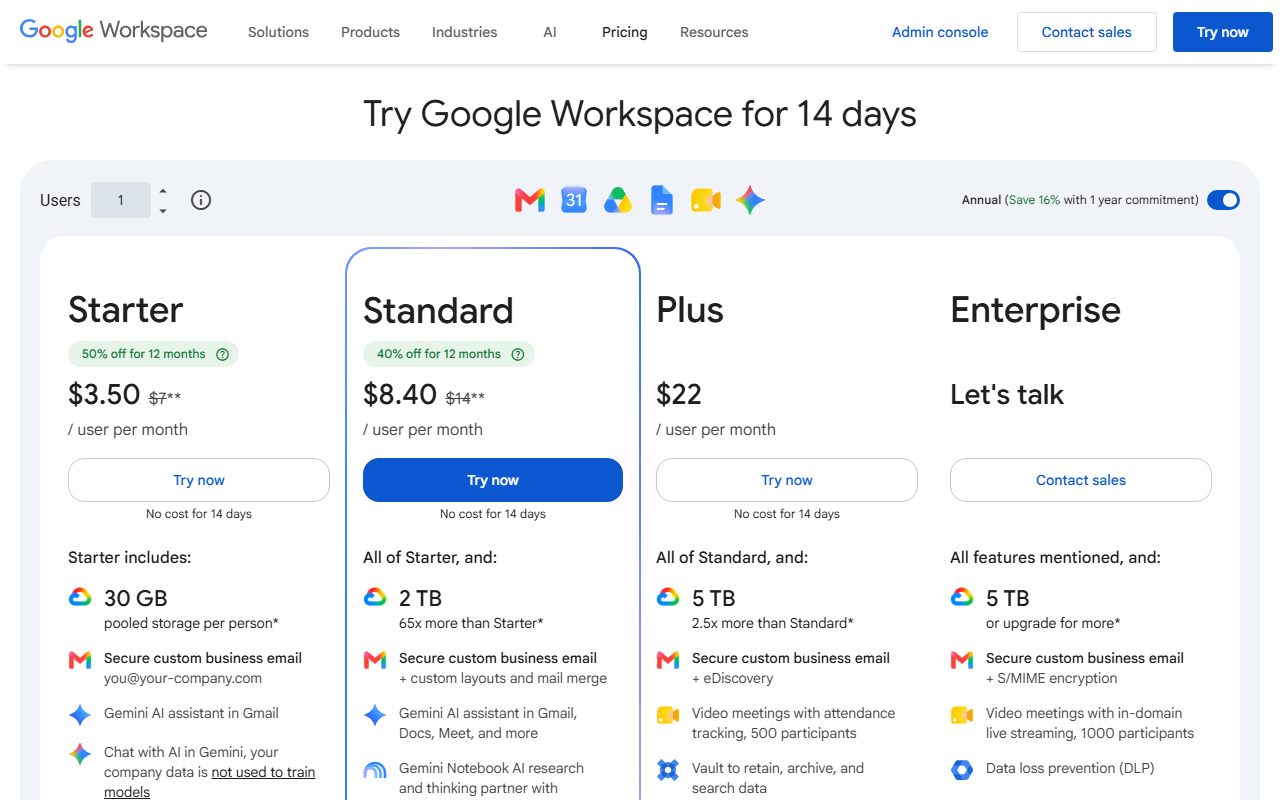
Google's seat-priced route is graded in the Gemini for Google Workspace review, and the full shortlist sits in the assistant plan guide.
Sources
- OpenAI API pricing (regional processing footnote) - checked October 30, 2026
- Anthropic model pricing (data residency pricing) - checked October 30, 2026
- Vertex AI generative AI pricing (global and non-global rows) - checked October 30, 2026
- Amazon Bedrock pricing (per-region tables) - checked October 30, 2026